WordPress Agencies: How AI Transforms Multiple Client Site Management
Discover how AI-powered WordPress management revolutionizes agency workflows, reduces maintenance overhead, and scales client site operations efficiently.
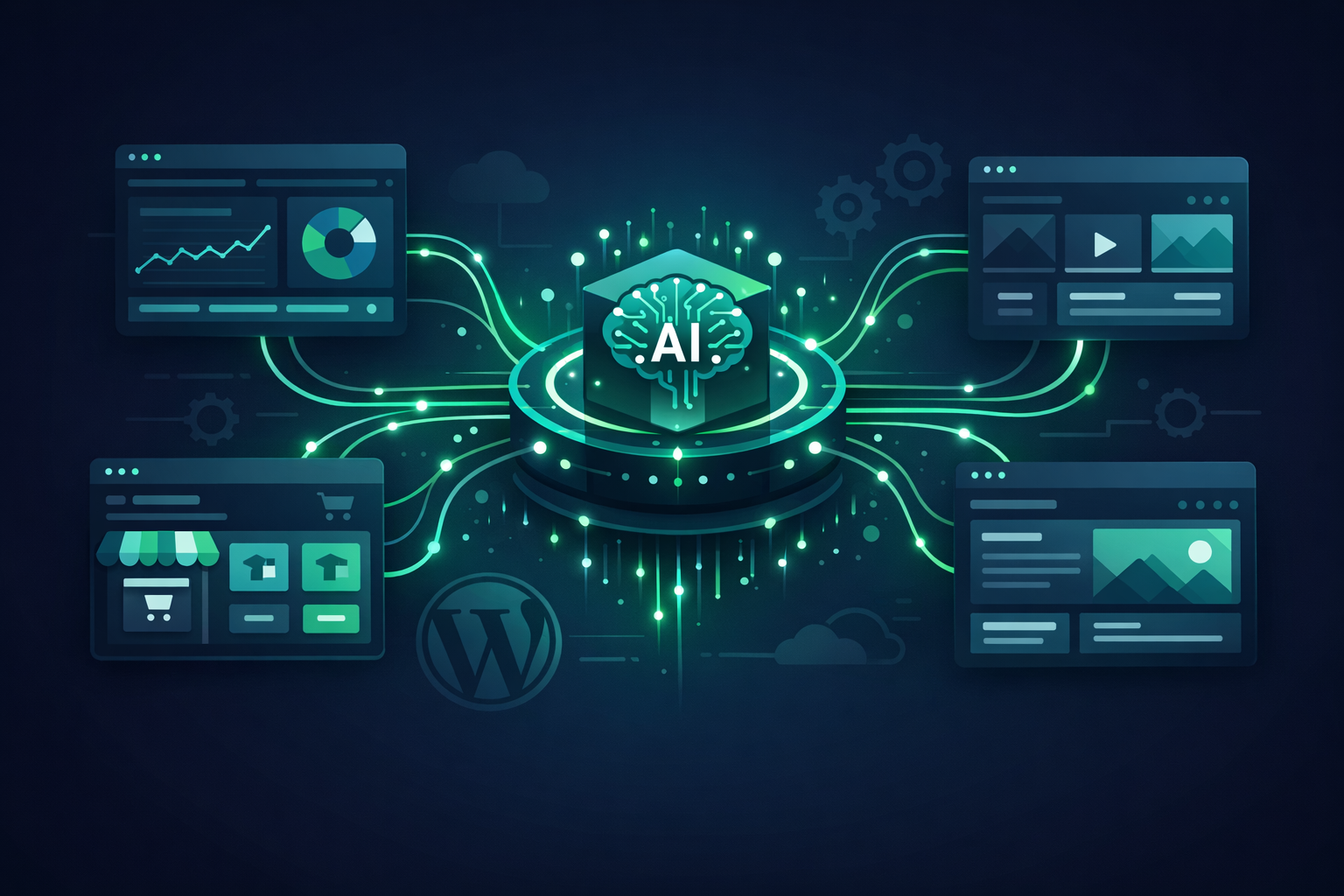
Managing multiple WordPress client sites is one of the biggest operational challenges facing digital agencies today. With each client demanding unique customizations, regular updates, and constant performance monitoring, agencies often find themselves drowning in maintenance tasks rather than focusing on growth and strategic work.
The solution lies in AI-powered site management that works with your existing client sites. Kintsu.ai transforms how agencies handle multiple WordPress installations by providing intelligent, automated management for the sites you already have — not forcing you to rebuild everything from scratch.
The Agency WordPress Management Crisis
According to recent industry research, agencies spend an average of 60-70% of their time on routine WordPress maintenance tasks across client sites. This includes plugin updates, security monitoring, performance optimization, and troubleshooting — work that generates little revenue but is absolutely essential.
Traditional management approaches create several critical problems:
• **Time Drain**: Manually updating and monitoring dozens of client sites consumes entire workdays
• **Security Risks**: One compromised site can expose an entire client portfolio
• **Performance Issues**: Resource conflicts and shared hosting limitations affect multiple sites simultaneously
• **Scalability Bottlenecks**: Adding new clients becomes exponentially more complex
• **Revenue Impact**: Maintenance work reduces time available for high-value strategic projects
Why Building New Sites Isn't the Answer
Most AI WordPress tools focus on creating new websites from scratch — but that misses the point entirely. Agencies don't need help building more sites; they need help managing the ones they already have.
Your clients come to you with existing WordPress sites that represent years of content, customizations, and SEO work. They don't want to start over; they want to make their current sites better, faster, and more effective.
This is where most AI solutions fail agencies. They're designed for new site creation, not existing site management. But managing what you already have is where the real agency pain points exist.
The Agentic AI Approach to Client Site Management
Agentic AI represents a fundamentally different approach to WordPress management. Instead of replacing human decision-making, it augments agency workflows by handling routine tasks intelligently while keeping experts in control of strategic decisions.
For agencies, this means:
• **Intelligent Automation**: AI handles routine updates and maintenance across all client sites simultaneously
• **Contextual Understanding**: The AI learns each client's specific requirements, brand guidelines, and technical constraints
• **Proactive Monitoring**: Issues are identified and resolved before clients even notice them
• **Scalable Operations**: Adding new client sites doesn't exponentially increase management overhead
Real-World Agency Transformation
Consider the typical agency scenario: You're managing 25 WordPress sites for different clients. Each site needs weekly plugin updates, monthly security scans, quarterly performance audits, and immediate response to any downtime or security alerts.
Without AI assistance, this requires:
• 10-15 hours per week just for routine maintenance
• Emergency response availability 24/7
• Specialized knowledge of each client's technical stack
• Detailed tracking of what was changed when across all sites
With AI-powered management, the same portfolio becomes:
• 2-3 hours per week for strategic oversight
• Automated emergency response and resolution
• AI understanding of each site's unique requirements
• Comprehensive change logs and performance reporting
Key Benefits for Agency Operations
Reduced Maintenance Overhead
AI handles the repetitive tasks that consume agency resources. Plugin updates, security patches, and performance optimizations happen automatically across all client sites, with intelligent rollback if issues are detected.
Enhanced Client Satisfaction
Clients experience faster response times, proactive issue resolution, and consistent performance improvements. They see more value from their agency relationship when technical problems are resolved before becoming business problems.
Revenue Optimization
With routine maintenance automated, agency teams can focus on high-value services like strategy, design, and growth initiatives. This shifts the business model from reactive maintenance to proactive growth partnerships.
Scalable Growth
Taking on new clients no longer means proportionally increasing operational overhead. AI management scales efficiently, allowing agencies to grow their client base without growing their maintenance teams.
Implementation Strategy for Agencies
Successfully integrating AI-powered WordPress management requires a structured approach:
Phase 1: Assessment and Prioritization
Start by auditing your current client portfolio. Identify sites with the highest maintenance overhead, most frequent issues, or greatest performance concerns. These become your AI management pilot sites.
Phase 2: Gradual Migration
Implement AI management for a small subset of client sites first. This allows your team to understand the new workflows and build confidence before expanding to the full portfolio.
Phase 3: Client Communication
Educate clients about the benefits they'll experience: faster response times, proactive maintenance, and improved performance. Frame this as a service upgrade, not a cost reduction measure.
Phase 4: Scale and Optimize
Once processes are refined, expand AI management across all client sites. Use the time savings to develop new service offerings or take on additional clients.
Common Implementation Challenges
Client Concerns About AI
Some clients may worry about AI making changes to their websites. Address this by emphasizing that AI enhances human expertise rather than replacing it. All major decisions still require human approval.
Team Resistance
Technical team members might resist automation that changes their daily workflows. Involve them in the implementation process and show how AI eliminates the tedious tasks they dislike while preserving the strategic work they enjoy.
Integration Complexity
Existing agency workflows, tools, and client communication processes may need adjustment. Plan for a transition period and maintain flexibility as you optimize new processes.
Measuring Success: Key Metrics for Agencies
Track these metrics to quantify the impact of AI-powered WordPress management:
• **Time Savings**: Hours per week spent on routine maintenance tasks
• **Response Times**: Average time to resolve client issues
• **Client Satisfaction**: Survey scores and retention rates
• **Revenue Per Client**: Ability to provide higher-value services
• **Portfolio Growth**: Number of new clients without adding maintenance staff
The Future of Agency Operations
AI-powered WordPress management isn't just about efficiency — it's about transformation. Agencies that embrace this technology will be able to offer better service at lower operational costs while scaling their operations more effectively.
The question isn't whether AI will transform agency operations, but whether your agency will lead this transformation or be forced to catch up. Try Kintsu.ai with your existing client sites and discover how AI can revolutionize your agency's WordPress management approach.
Getting Started
Ready to transform your agency's WordPress management operations? The key is starting with your existing client sites rather than waiting for new projects. AI-powered management works best when applied to established sites with known performance patterns and client requirements.
Begin with your most maintenance-intensive client sites, measure the results, and scale from there. Your clients will notice the improved response times and proactive issue resolution, while your team will appreciate the freedom to focus on strategic work rather than endless maintenance tasks.