The Future of WordPress Website Management: What AI, Automation, and No-Code Mean for Site Owners
Where is WordPress management heading? Explore how AI editing, automation, and no-code tools are reshaping how websites are built, maintained, and optimized from 2026 and beyond.
⚠️ AI-Generated Content Disclaimer
Some content on this page was generated with the assistance of artificial intelligence. While we strive for accuracy, AI-generated content may contain inaccuracies or outdated information. Please verify any critical information independently. This content is provided for informational purposes only and should not be considered professional advice.
WordPress has reinvented itself multiple times since its launch in 2003. From blogging platform to full CMS. From classic editor to Gutenberg blocks. From developer-dependent to page-builder accessible. Each evolution made WordPress usable by more people for more purposes.
The next evolution is already underway, and it's the most significant yet. AI-powered management is transforming WordPress from a platform you operate to a platform that operates for you. Here's where it's heading and what it means for site owners.
Where We Are Now: The 2026 Baseline
To understand where WordPress management is going, it helps to acknowledge where it stands today:
WordPress powers 43% of all websites globally
The average business WordPress site costs $6,000 to $18,000 per year to maintain
Most site owners still depend on developers for routine changes
Page builders solved the design problem but created performance and lock-in problems
AI editing tools have emerged but adoption is still early
The gap between what site owners want to do and what they can do remains significant
2026 is the transition year. The tools to manage WordPress without technical expertise now exist. The question is how quickly adoption accelerates and how far the technology goes.
Trend 1: Natural Language Becomes the Primary Interface
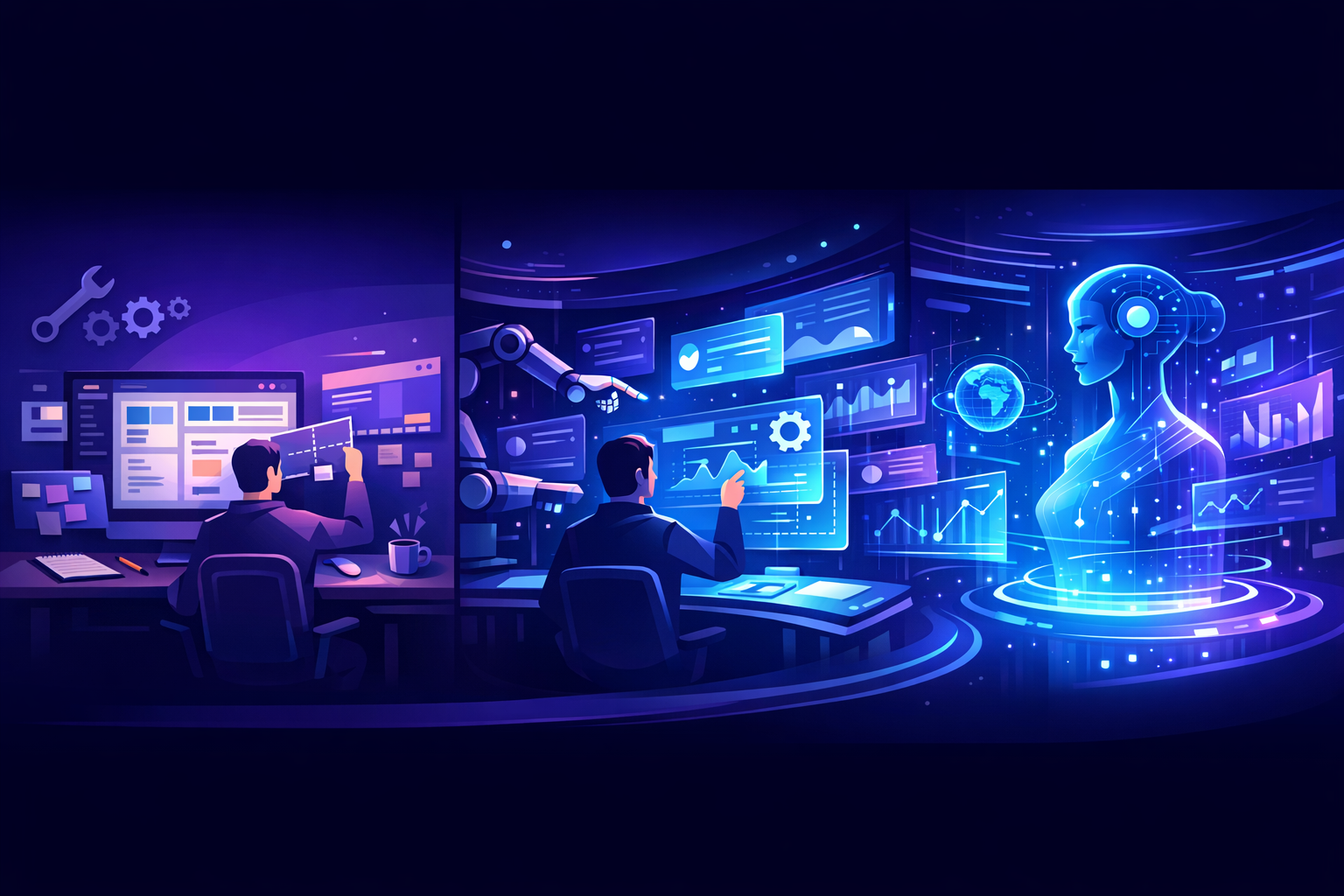
The trajectory from code to visual to conversational is clear:
2003 to 2015: Code editing (HTML, CSS, PHP required for customization)
2016 to 2023: Visual editing (page builders, block editor, drag-and-drop)
2024 to 2026: Conversational editing (describe changes in natural language)
2027+: Predictive editing (AI suggests and implements improvements proactively)
Today, tools like Kintsu.ai let you describe changes in plain English. Tomorrow, you may not even need to describe them. The AI will analyze your site, your analytics, and your industry trends, then suggest and implement improvements with your approval.
The interface evolution follows a consistent pattern: each generation removes a layer of technical knowledge required. Conversational editing removes nearly all of it. Predictive editing will remove the need to even identify what should change.
Trend 2: Continuous Improvement Replaces Periodic Redesigns
The traditional WordPress lifecycle follows a predictable and expensive pattern: build, use for 2 to 3 years, notice it's outdated, spend $5,000 to $20,000 on a redesign, repeat.
AI-powered management breaks this cycle:
Small improvements happen weekly or daily instead of annually
Design stays current through incremental updates
Content stays fresh because updates are frictionless
The 'big redesign' becomes unnecessary because the site never becomes outdated
This shift from periodic to continuous management has profound cost implications. Instead of $10,000 every three years for a redesign, you spend $29 to $199 per month on AI-assisted continuous improvement. The total is lower and the result is better because your site is always current rather than oscillating between 'just redesigned' and 'needs redesigning.'
Trend 3: The Developer Role Evolves
WordPress developers aren't going away, but their role is changing:
Declining Demand
Routine content updates (already being replaced by AI)
Basic design changes (AI handles these effectively)
Simple CSS modifications (natural language replaces this)
Standard plugin configuration (increasingly automated)
Growing Demand
Complex custom plugin development
WordPress application architecture (headless, decoupled setups)
Performance engineering at scale
AI tool integration and customization
Security architecture and incident response
Migration and infrastructure planning
The developer who thrives in the future of WordPress is less of a maintenance technician and more of an architect. Routine implementation becomes AI territory; strategic planning and complex engineering become the human domain.
Trend 4: Headless WordPress Goes Mainstream
Headless WordPress (using WordPress as a content backend while displaying content through a separate frontend framework) has been growing among developer-focused projects. AI management accelerates this trend:
AI tools can manage content through WordPress REST API regardless of the frontend
Performance improves because the frontend is optimized independently
Design flexibility increases because you're not constrained by WordPress themes
The same content can power websites, mobile apps, and other channels
For most small to mid-size sites, traditional WordPress with AI editing will remain the practical choice. But headless WordPress with AI content management will grow significantly in enterprise and multi-channel contexts.
Trend 5: AI-Powered Analytics Drive Decisions
Today, WordPress analytics are passive. You look at reports and decide what to do. The future is active analytics where AI interprets data and takes action:
AI identifies pages with declining traffic and suggests content updates
Conversion data triggers automatic A/B testing of page elements
User behavior patterns prompt layout and navigation improvements
SEO ranking changes trigger content optimization automatically
Page speed issues are detected and fixed without human intervention
This closes the loop between measurement and action. Instead of reviewing analytics quarterly and planning changes, the AI continuously monitors and improves based on real performance data.
Trend 6: Security and Maintenance Become Invisible
WordPress security and maintenance are currently active concerns that require attention and sometimes intervention. The trend toward automation makes these invisible:
Core and plugin updates happen automatically with compatibility testing
Security threats are detected and mitigated by AI before they cause damage
Performance degradation is automatically diagnosed and corrected
Backups are continuous and restoration is one-click
SSL, DNS, and hosting configuration are managed automatically
For site owners, this means the entire infrastructure layer of WordPress management fades into the background. You focus on content and business; the technology maintains itself.
Trend 7: WordPress Becomes Platform-Agnostic
The line between WordPress and other platforms is blurring:
AI editing tools work with WordPress but could work with any CMS
Content created through AI can be published to multiple platforms simultaneously
Design principles applied through natural language aren't WordPress-specific
The value shifts from the platform to the management layer on top of it
This doesn't mean WordPress becomes irrelevant. Its massive ecosystem, plugin library, and community ensure its dominance for years. But the management experience increasingly abstracts away the underlying platform. You manage your website; whether it runs on WordPress, a headless CMS, or something else becomes an implementation detail.
What This Means for Site Owners Today
Understanding these trends helps you make better decisions now:
Invest in Content, Not Infrastructure
The technical cost of WordPress management is declining rapidly. Redirect that budget toward content quality, customer experience, and business strategy. The AI handles the implementation.
Adopt AI Editing Now
Early adoption of AI WordPress management gives you a competitive advantage. Sites managed with AI tools are more frequently updated, better optimized, and less expensive to maintain. That advantage compounds over time.
Don't Over-invest in Page Builder Expertise
Page builders are being superseded by AI editing. If you're considering investing weeks learning Elementor or Divi, consider that the same time invested in learning AI editing yields better long-term returns.
Keep Your WordPress Site
Some site owners consider switching to closed platforms like Wix or Squarespace for simplicity. With AI management, WordPress becomes just as simple to manage while retaining its superior flexibility, plugin ecosystem, and SEO capability.
Build for Flexibility
Choose themes and plugins that follow WordPress standards rather than proprietary approaches. Standard WordPress code is what AI tools understand best. Clean, standards-compliant sites get the most value from AI management.
The Timeline
2026: AI editing tools reach mainstream awareness. Early adopters see 60 to 80% cost reduction
2027: Proactive AI becomes standard. Tools suggest improvements, not just implement requests
2028: AI-managed WordPress sites outnumber traditionally managed ones among businesses
2029: The concept of 'WordPress maintenance' as a separate cost center largely disappears
2030: WordPress management is indistinguishable from having a conversation about your website
The future of WordPress management isn't more complex tools. It's simpler ones that do more. Kintsu.ai represents the current state of the art: natural language editing for existing WordPress sites with sandbox safety. What comes next will build on this foundation, making WordPress management progressively more intelligent, more automated, and more accessible.
The best time to start managing your WordPress site with AI was yesterday. The second best time is today.